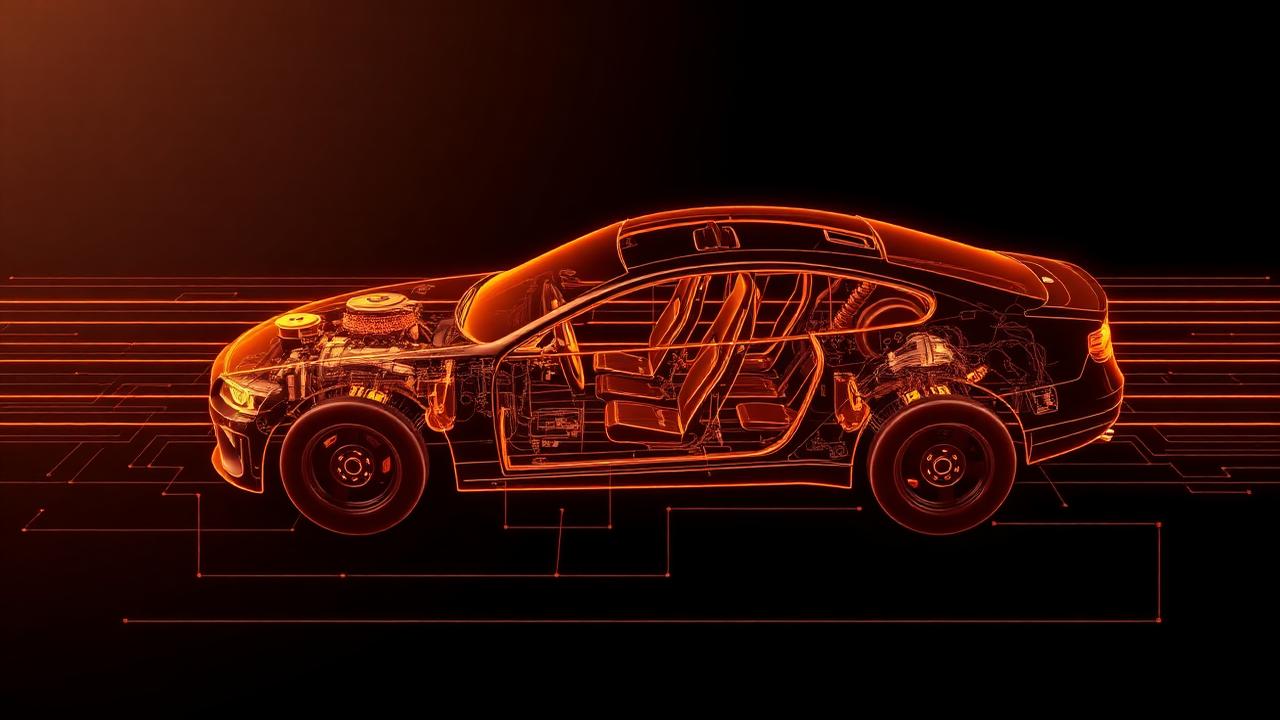
INSIDE THE CAR
The mechanics — the backbone and structure of every car.

Engine
Internal combustion engines burn fuel inside cylinders to push pistons, turning a crankshaft. Configurations range from inline-4s for efficiency to W16s and V12s for raw power. Electric motors replace this with magnets and current — instant torque, zero combustion.

Transmission
Translates engine RPM into wheel speed via gears. Manuals, automatics, dual-clutch (DCT), CVTs and single-speed (EV) each balance efficiency, speed and feel differently.

Drivetrain
RWD pushes from the back, FWD pulls from the front, AWD splits torque to all four wheels. Modern AWD systems can vector torque per wheel for cornering grip.

Suspension
Springs and dampers (MacPherson, double-wishbone, push-rod) absorb bumps and keep tires planted. Active and air systems adjust ride height and stiffness on the fly.

Brakes
Calipers squeeze pads against rotors, converting motion into heat. Carbon-ceramic discs resist fade at extreme speeds and shave weight. EVs add regenerative braking that recovers energy.

Chassis
The structure everything bolts to. Steel unibody for daily cars, aluminum spaceframes for sports cars, carbon-fiber monocoques for supercars and hypercars.

Aerodynamics
Splitters, diffusers and rear wings shape air to reduce lift, increase downforce or cut drag. Active aero adapts at speed — wings tilt, flaps open.

Electronics
ECUs orchestrate fuel injection, ignition, traction control, stability and driver-assist. Modern cars run millions of lines of code across dozens of microprocessors.